Screw piles have become one of the most reliable foundation systems for residential, commercial, and large-scale infrastructure projects. Their speed of installation, adaptability across soil conditions, and immediate load-bearing capacity make them a preferred choice for builders and engineers.
However, the success of any screw pile project depends on planning, engineering, and proper execution. Without the right approach, projects risk cost blowouts, delays, or compromised structural performance.
This guide sets out ten essential considerations for achieving successful screw pile installation.
1. Soil Testing and Site Classification
Every screw pile installation must begin with a geotechnical investigation. Soil testing determines the type, strength, and behaviour of the ground at different depths.
A detailed site classification ensures piles are designed for the correct soil conditions. Skipping this step can result in piles that are either oversized (leading to unnecessary expense) or undersized (leading to structural failure).
2. Determining Load Requirements
Understanding the loads the structure will impose is critical. Screw piles must be engineered to support vertical loads (downward pressure), lateral loads (side forces), and uplift loads (pulling forces).
Accurate load calculations are essential for safety and compliance, ensuring the foundation matches the performance requirements of the building or infrastructure project.
3. Correct Pile Design
No two sites are the same. Factors such as soil profile, water table depth, and project type influence the pile design.
Helix size, shaft diameter, and overall pile length should be selected to match the site and load conditions. Custom-engineered screw piles deliver superior results compared to off-the-shelf designs.
4. Corrosion Protection
Soil chemistry and environmental conditions can accelerate steel corrosion. In coastal regions, flood-prone areas, or aggressive soils, galvanised or stainless steel piles may be required.
Choosing the right corrosion protection ensures the foundation’s performance over its intended lifespan, often decades.
5. Installation Equipment
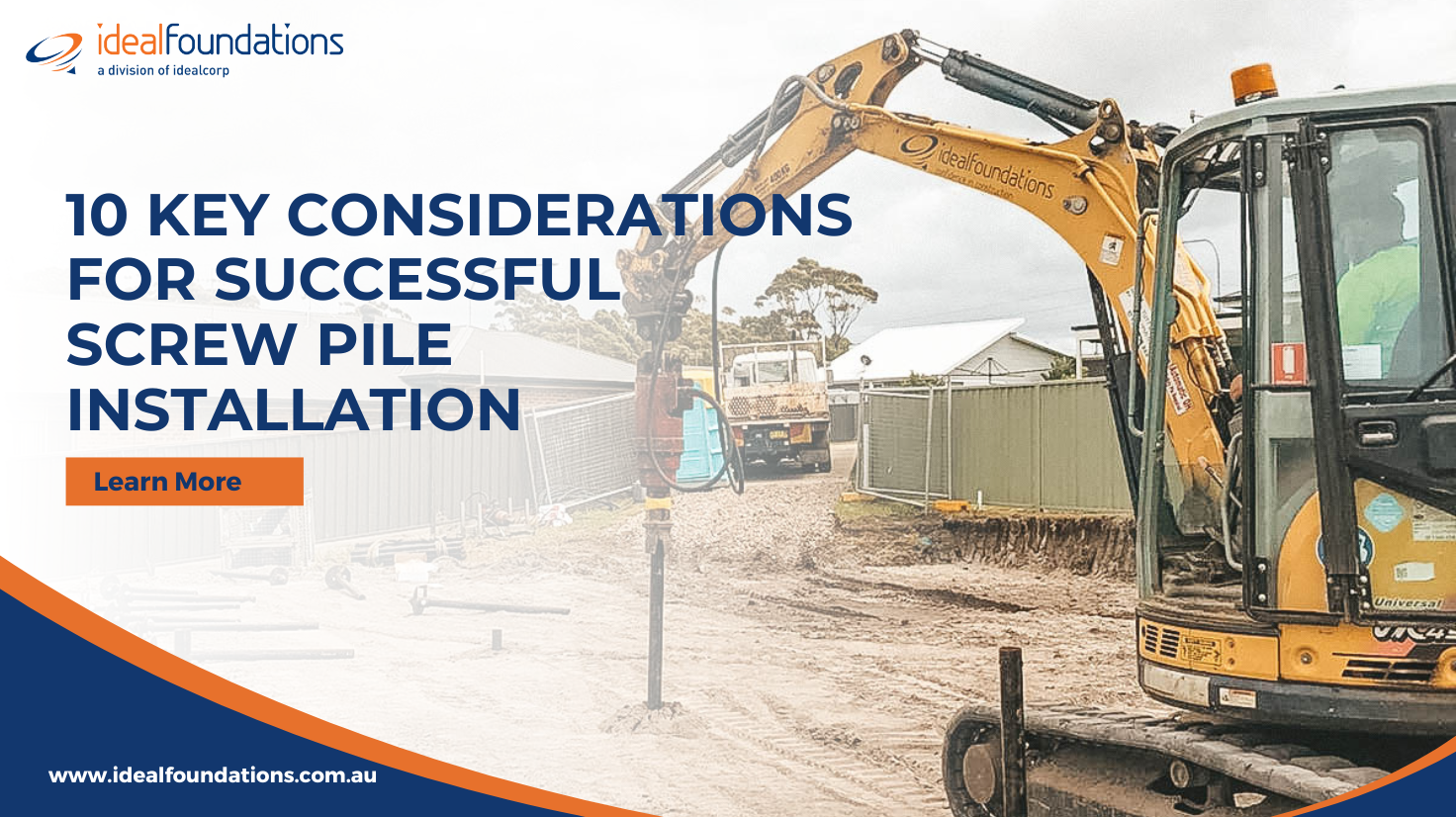
Screw piles are installed using hydraulic torque motors attached to excavators or other plant. The right machine size and torque rating are essential for efficient installation.
If equipment is underpowered, piles may not reach the required depth or torque, resulting in delays and compromised load capacity.
6. Torque Monitoring
Torque during installation is a direct indicator of the pile’s load-bearing capacity. By continuously monitoring torque values, contractors can confirm that piles meet engineering requirements.
This step provides a verifiable quality assurance record and reduces the risk of structural issues.
7. Site Access and Logistics
Every project site presents unique challenges. Narrow roadways, overhead services, restricted turning areas, or soft ground conditions can all affect installation.
Planning for site logistics ensures the right equipment can access the work area and complete installation without unnecessary downtime.
8. Compliance with Standards
In Australia, pile design and installation must comply with relevant codes and standards, including AS 2159 for piling design and testing.
Compliance guarantees safety, performance, and accountability, and provides assurance to project stakeholders.
9. Budget and Cost Planning
Although screw piles often reduce overall project costs compared to traditional foundations, accurate budgeting is important.
Costs to consider include engineering design, manufacturing, delivery, installation, and any site-specific requirements such as corrosion protection or specialist testing. A clear cost plan avoids financial surprises.
10. Selecting the Right Contractor
The contractor’s experience is often the difference between a smooth project and costly delays. An experienced screw pile installer understands how to adapt to unexpected soil conditions, verify pile performance, and deliver projects efficiently.
Choosing a contractor with proven expertise ensures quality outcomes and minimises project risks.
Conclusion
Screw piles offer unmatched advantages in speed, flexibility, and reliability, but their success depends on careful planning and execution.
By considering soil conditions, load requirements, design, equipment, compliance, and contractor expertise, builders and engineers can ensure foundations are safe, cost-effective, and built to last.
At Ideal Foundations, we design, supply, and install screw piles engineered for Australian conditions. Our team has proven experience across residential, commercial, and infrastructure projects.
Get out of the ground faster. Take control with Ideal Screw Piers. Contact Ideal Foundations today to discuss a solution tailored to your site.