Installing Screw Piles on a Remote Island: The Tangalooma Resort Project
09 Jun 2026
Installing screw piles on an island comes with challenges you don’t face on a typical construction site.
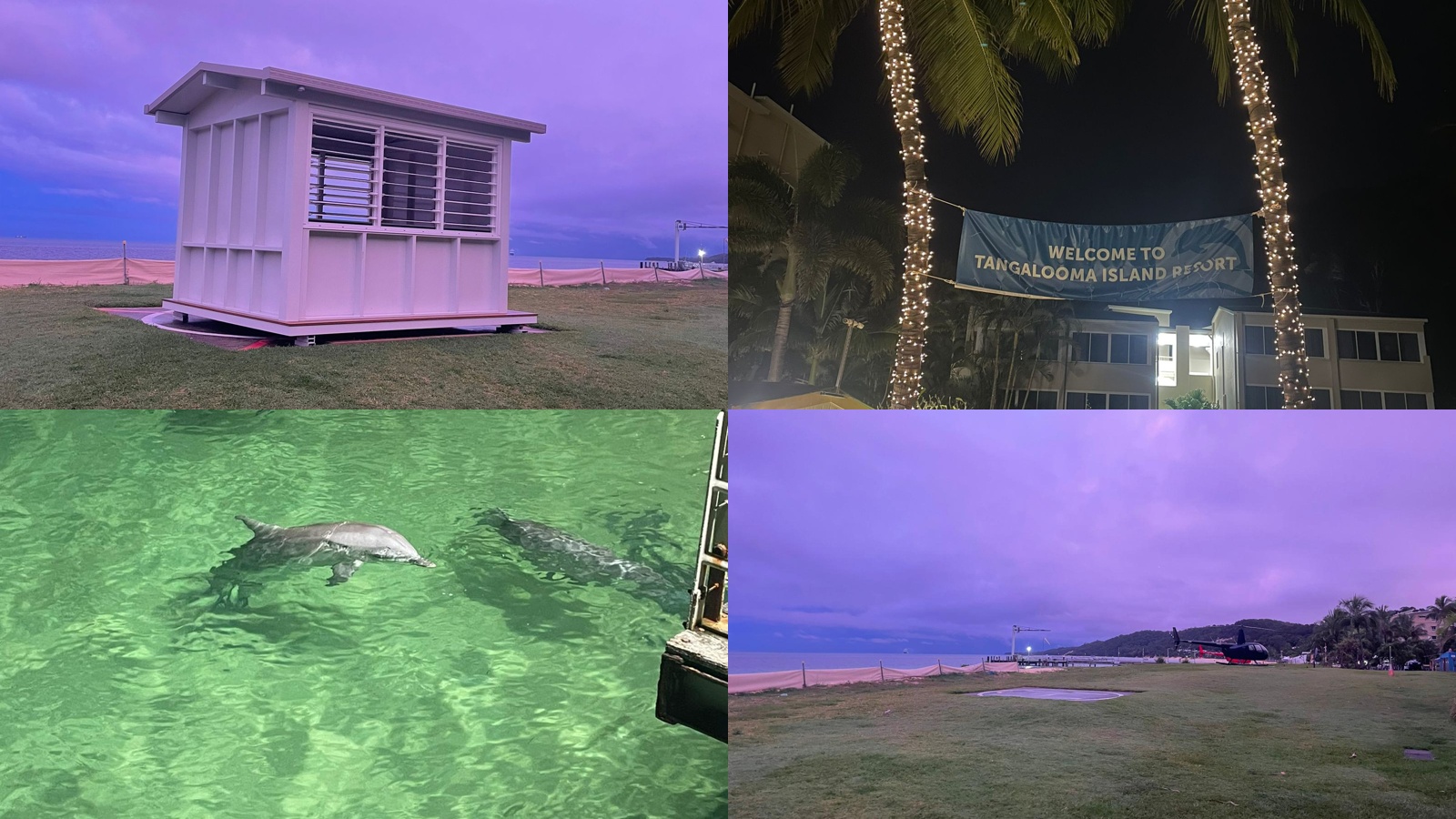
IdealFoundations was engaged to install 59 galvanised screw piles for new beachfront cabanas at Tangalooma Island Resort on Moreton Island, Queensland.
With sandy coastal ground conditions and a site accessible by ferry, the project required careful planning from transport through to installation.
1. Getting the Screw Piles to Moreton Island
Before installation could begin, the first challenge was simply getting everything to site.
The screw piles, equipment and machinery were transported to Moreton Island by barge, while our team travelled separately via the MICAT ferry.
Once on the island, the team drove along the beach to reach the project site, making logistics an important part of the project.
2. Installing 59 Screw Piles in Sandy Ground
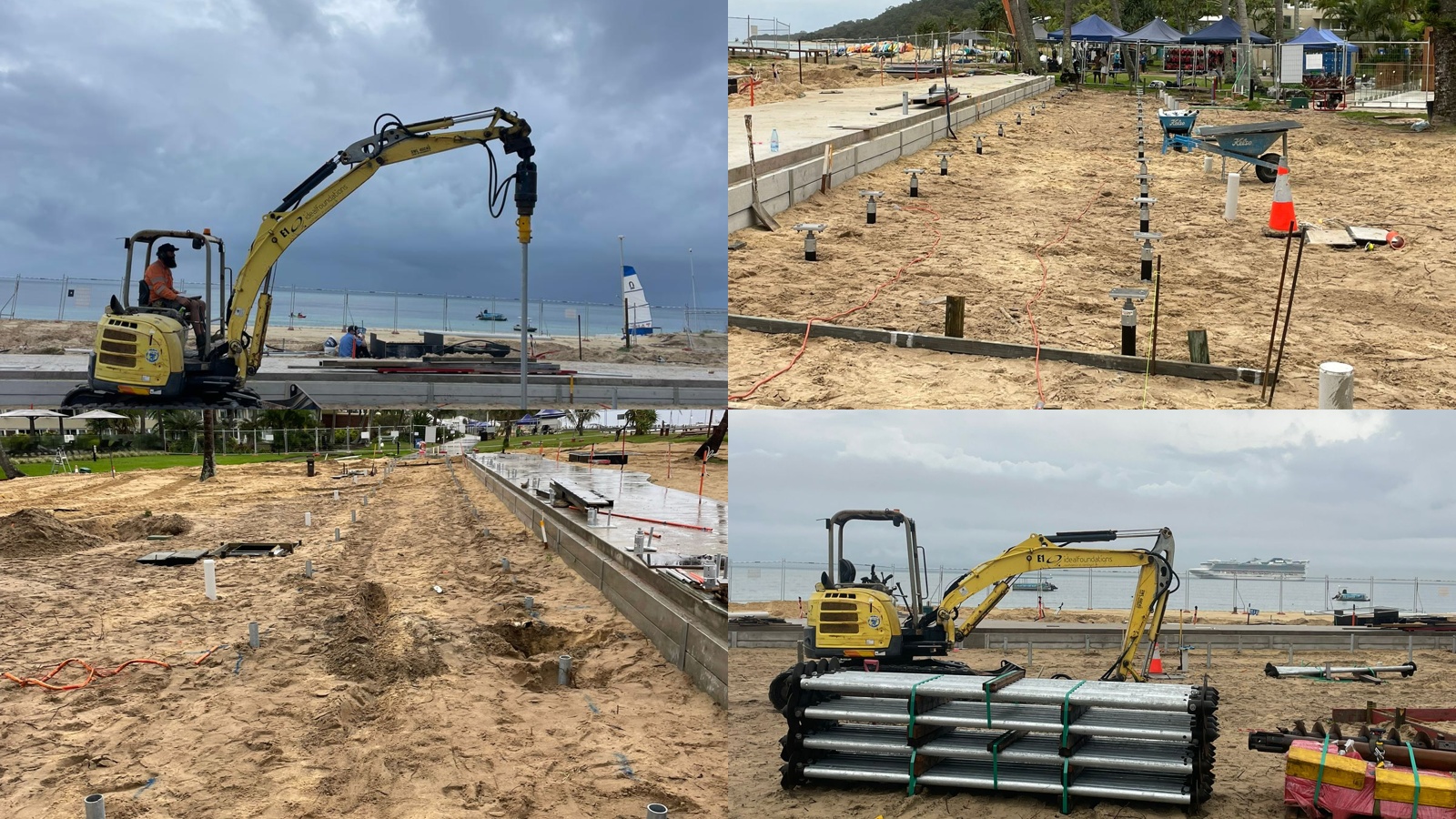
The project required 59 galvanised screw piles with adjustable caps to support the new resort cabanas.
The sandy coastal conditions needed to be considered as part of the foundation solution.
Screw piles provided an efficient option with minimal excavation and site disturbance, which was particularly useful for a beachfront resort environment.
3. An Unexpected Site Challenge
During installation, our team encountered buried debris from the site’s previous use as a whaling station.
A large steel beam was discovered beneath the ground and needed to be excavated, cut and removed before installation could continue.
It was an unexpected challenge, but the team adapted on site and kept the project moving.
4. The Result
All 59 galvanised screw piles were successfully installed and prepared to support the new beachfront cabanas.
From transporting equipment by barge to working in sandy coastal conditions, the project demonstrated how careful planning and the right foundation solution can help deliver screw pile projects in challenging and remote locations.
5. Planning a Screw Pile Project in Queensland?
IdealFoundations provides engineered screw pile solutions for residential and commercial projects across Queensland.
Planning your next project? Contact IdealFoundations to discuss your screw pile requirements.
How IdealFoundations Installed 152 Screw Piles at Mount Vernon Without Missing a Single Spec
12 May 2026
Not every job goes to plan from day one. Mount Vernon was one of those jobs.
A residential builder needed a full pad completed: 152 screw piles, positioned beneath load-bearing walls, wet areas, and other structurally critical sections of the build. The engineering specs were straightforward: minimum 3.3 metres depth, 70kN capacity on every single pile.
The ground had other ideas.
When the Test Piles Told Us Something Was Wrong
Before full installation begins, IdealFoundations always runs a series of test piles across the site. It is one of the most important steps in any project — it tells us exactly what the ground is doing before the real work starts.
At Mount Vernon, those tests revealed a problem early. The soil conditions across the pad were too stiff to reach the required 3.3-metre depth using the initial setup. Forcing piles into ground that isn’t ready risks falling short on torque and capacity. That is not something we are willing to accept.
So we adapted.
The Decision: Pre-Drill the Entire Pad
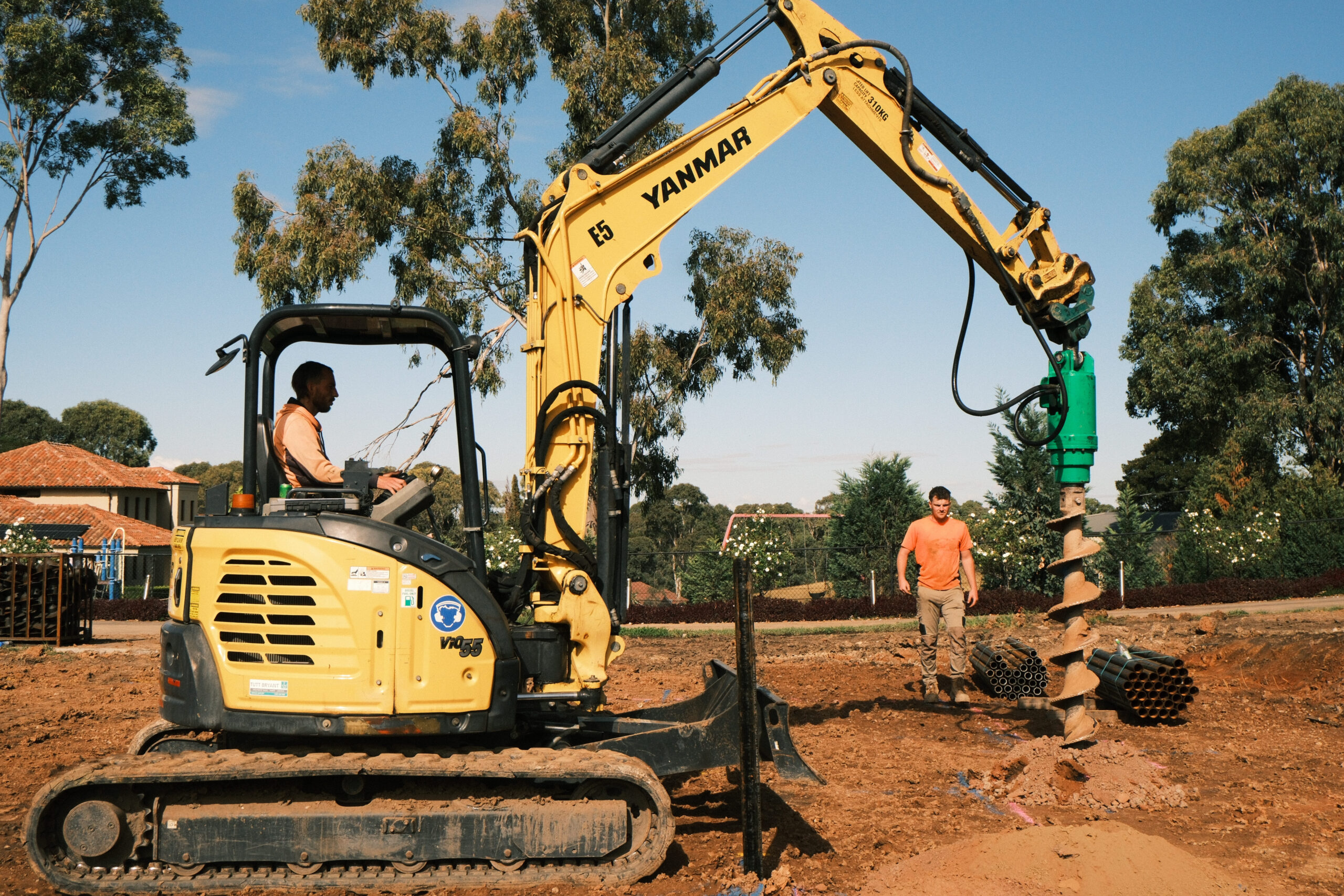
We set up the 3.5-metre auger and began drilling pilot holes to a depth of 3 metres across the entire pad footprint. Two full days of preparation before a single screw pile went in permanently.
Pre-drilling breaks up the stiff soil profile and allows each pile to be driven to the correct depth and torque. It adds time to the preparation phase — but it guarantees the outcome. And when 152 piles are going into a residential foundation, the outcome is everything.
Four Days. Every Pile to Spec.
Day one covered the full set-out of all 152 pile locations using the builder’s architectural plans, slab plan, and pier layout — then test piles, then the auger in the ground.
Day two continued pre-drilling across the pad. Between runs, excess spoil was scraped and removed, holes were backfilled for safety, and every pile location was prepped with a lead pipe and helix ready for installation.
Day three was installation day. Every pile driven to a minimum of 3.3 metres. Every pile checked for the required 70kN capacity. No shortcuts, no skipped checks.
Day four finished the remaining piles, then moved to the final stage. A laser level was used to mark each cut-off height to the engineer’s specifications. Oxy-acetylene cutting equipment brought each pile cleanly to ground level. 220 square caps were fitted across the full pad. A final clean-up left the site level, tidy, and ready for the next trade.
The Result
152 screw piles installed. Every one to specification. Site handed back clean in four days.
Not one pile missed the 3.3-metre depth requirement. Not one pile missed the 70kN capacity. The pad was finished at ground level, capped, and left ready for construction to continue.
Mount Vernon sits up a long driveway with one of the better views we have seen on a job. Leaving a pad that clean behind us made it even better.
That is the standard IdealFoundations holds on every project — whatever the ground throws at us.
Need screw pile installation for your next build? Talk to the IdealFoundations team.
Engineering Guidelines for Screw Piles in Complex Sites
14 Oct 2025Complex construction sites require more than a standard foundation approach. Difficult soil conditions, restricted access, high structural loads and surrounding site constraints can all influence screw pile design.
These screw pile engineering guidelines cover some of the key factors builders and engineers should consider when planning screw pile foundations for complex sites.
1. Understand the Ground Conditions
A reliable screw pile design starts with understanding the ground.
Geotechnical investigation can provide important information about:
- Soil strength and profile
- Depth of suitable founding material
- Groundwater conditions
- Potentially aggressive soil conditions
This information helps engineers determine the appropriate pile design and installation requirements.
2. Design Screw Piles for the Site
Screw pile design should reflect both the structural requirements and ground conditions of the project.
Key design considerations may include:
- Shaft diameter
- Helix size and configuration
- Pile length
- Required pile capacity
- Corrosion protection
There is no single pile configuration suitable for every project.
3. Consider Structural Loads
Screw piles may need to resist more than vertical loads.
Depending on the structure, engineers may also need to consider lateral and uplift forces when designing the foundation system.
The required pile capacity and configuration should therefore be based on the specific loads and engineering requirements of the project.
4. Plan for Site Access
Complex sites can involve restricted access, existing structures, underground services or limited working space.
Before installation, the project team should consider:
- Equipment access
- Pile locations
- Underground and overhead services
- Existing structures
- Available working space
Planning these factors early can help reduce installation issues once work begins.
5. Monitor Installation Performance
During screw pile installation, factors such as depth and torque can be monitored to help assess installation performance.
Depending on the engineering requirements and site conditions, additional testing may also be required to verify pile capacity.
6. Consider Compliance and Site Requirements
Screw pile design and installation should consider the relevant engineering standards, project specifications and site requirements.
For complex projects, early coordination between engineers, geotechnical consultants, builders and the screw pile contractor can help identify potential issues before installation.
7. Planning Screw Piles for a Complex Site?
Every complex site presents different engineering and construction challenges.
IdealFoundations provides engineered screw pile solutions based on individual ground conditions, structural requirements and site constraints, with design, manufacturing and installation managed in-house.
Working on a complex project? Contact IdealFoundations to discuss your screw pile requirements.
How Screw Piles Reduce Site Preparation Costs
14 Oct 2025Site preparation can add significant time and cost to a construction project. Excavation, soil removal, machinery and foundation preparation all need to be considered before construction can move forward.
Screw pile site preparation generally requires less excavation and ground disturbance, which can help simplify foundation works and reduce associated site costs.
1. Minimal Excavation
Traditional foundation systems may require excavation for footings, trenches or other foundation works.
Screw piles are mechanically rotated directly into the ground, requiring relatively little excavation. This can reduce the amount of site preparation required before installation.
2. Less Spoil Removal
Less excavation also means less spoil to manage and remove from site.
This can reduce the need for additional handling, transport and disposal, particularly on sites where access or available working space is limited.
3. Efficient Installation
Screw piles are installed using hydraulic equipment and can provide immediate load bearing capacity once correctly installed.
Without concrete curing time, construction can move to the next stage sooner after the foundation installation is completed.
4. Reduced Site Disruption
Minimal excavation and relatively compact installation equipment can help reduce disruption across the construction site.
This can be particularly useful for residential projects, limited access sites and projects close to existing structures.
5. Designed Around Site Conditions
Ground conditions can significantly affect foundation preparation requirements.
Screw piles can be designed around the soil profile, structural loads and engineering requirements of the project, helping reduce the need for unnecessary ground preparation.
6. Plan and Control Your Foundation Costs
Understanding your foundation requirements early can help you better plan your construction budget.
IdealFoundations provides tools to help builders and property owners estimate and manage screw pile costs before installation.
Use our Screw Pile Cost Estimate tool to get an initial estimate or explore Control Your Costs system, for more information about planning your foundation costs.
Planning Your Foundation Works?
IdealFoundations provides engineered screw pile solutions for residential and commercial construction, with design, manufacturing and installation managed in-house.
Planning your next project? Contact IdealFoundations to discuss your foundation requirements.
Factors That Affect Screw Pile Installation Costs
14 Oct 2025When planning a construction project, foundation costs play a significant role in budgeting. Screw piles are often a cost-effective alternative to traditional foundations, thanks to their speed, efficiency, and adaptability.
However, the price of screw pile installation can vary widely depending on a range of factors. Understanding what influences screw pile installation costs helps builders and developers budget accurately and avoid unexpected expenses.
This article explains the main factors that affect screw pile pricing in Australia.
1. Soil Conditions and Site Classification
The type of soil on site has one of the biggest impacts on cost. Soft, sandy, or highly reactive soils may require longer piles or larger helices to reach stable strata.
Rocky ground can also increase costs because it slows down installation and requires more robust equipment. A geotechnical report provides clarity upfront, reducing surprises.
2. Pile Design and Specifications
Not all screw piles are the same. Variables such as shaft diameter, pile length, and helix size all affect material and manufacturing costs.
Custom-engineered piles designed for high loads or unique soil conditions will generally cost more than standard designs, but they ensure long-term performance and safety.
3. Load Requirements
The loads that piles need to support will influence design and cost. Residential homes may only require light to medium capacity piles, while infrastructure projects demand heavy-duty solutions.
Higher load requirements often mean larger or deeper piles, which increases both material and installation expenses.
4. Corrosion Protection
For projects in coastal areas, flood zones, or aggressive soils, piles may need galvanisation or stainless steel construction. While these options add upfront cost, they protect the piles against long-term deterioration and ensure compliance with design life requirements.
5. Installation Equipment and Access
The type of machinery required depends on pile size, site conditions, and access restrictions. Sites with limited access may need smaller machinery, which can slow installation and increase labour costs.
If specialist equipment is required to achieve high torque or handle difficult conditions, this will also affect the overall cost.
6. Project Size and Quantity of Piles
Larger projects typically benefit from economies of scale, as mobilisation and setup costs are spread across more piles. Small jobs may appear more expensive on a per-pile basis because fixed costs cannot be shared.
7. Compliance and Testing
Some projects, particularly infrastructure works, require load testing, certification, and strict compliance with Australian Standards (AS 2159). These quality assurance steps add cost but are essential for safety and accountability.
8. Transport and Logistics
The location of the project affects delivery costs. Remote sites may involve additional freight charges, while urban projects can be impacted by restricted access or traffic management requirements.
9. Contractor Expertise
Engaging an experienced screw pile contractor often comes at a premium, but it reduces the risk of costly mistakes, delays, or rework. A skilled contractor ensures piles are installed correctly the first time, saving money in the long run.
10. How to Estimate and Control Your Costs
Understanding the factors is the first step, but having the right tools to plan your budget is just as important.
At Ideal Foundations, we provide two simple ways to help you manage costs with confidence:
-
Estimate Your Costs Online: Use our Screw Pile Cost Estimate tool to get a quick, project-specific estimate.
-
Lock in Fixed Pricing: With our Control Your Costs system, the quoted price is the price you’ll pay — no hidden extras.
This combination gives you both flexibility at the budgeting stage and certainty when work begins.
While screw piles are often more cost-effective than traditional foundations, their final price depends on multiple factors including soil conditions, pile design, load requirements, corrosion protection, and site logistics.
By understanding these variables, builders and developers can budget more accurately and avoid hidden costs.
At Ideal Foundations, we provide clear, upfront pricing for screw pier design and installation. Our team ensures your project stays on budget while delivering strong, compliant, and long-lasting foundations.
Take control of your foundation costs. Contact Ideal Foundations today for a tailored quote.
ROI of Screw Piles: Faster Builds, Lower Costs
10 Oct 2025In construction, time and money are the two biggest drivers of project success. Every delay or cost overrun erodes profit margins and stretches resources. Foundations are often a bottleneck, with traditional methods like concrete footings slowing progress and increasing labour costs.
Screw piles offer a smarter alternative. By reducing installation time, eliminating curing delays, and lowering site preparation costs, they deliver a measurable return on investment (ROI) for builders, developers, and infrastructure projects.
This article explores the key ways screw piles improve ROI by enabling faster builds and reducing overall costs.
1. Speed of Installation
Traditional footings require excavation, formwork, concrete pouring, and curing — a process that can take weeks. Screw piles, on the other hand, are installed using hydraulic equipment in a matter of hours.
Because they are load-bearing immediately, builders can begin construction as soon as installation is complete. This speed accelerates project timelines and improves cash flow.
2. Reduced Site Preparation Costs
Screw piles minimise excavation and spoil removal, cutting down on labour, equipment, and waste disposal costs. They also reduce the need for soil stabilisation or replacement on sites with poor ground conditions.
By simplifying site preparation, screw piles save thousands of dollars, especially on large-scale or complex projects.
3. Lower Labour and Equipment Expenses
Fewer machines and less manpower are required for screw pile installation compared to traditional foundations. One excavator fitted with a torque head is often all that’s needed, reducing fuel, operator hours, and site congestion.
This streamlined process directly lowers labour costs and equipment hire fees.
4. Minimal Weather Delays
Wet weather can halt concrete pouring and extend curing times, causing schedule blowouts. Screw piles are far less affected by rain or waterlogged soils, allowing work to continue even in poor conditions.
Fewer weather-related delays means more predictable schedules and reduced risk of costly overruns.
5. Versatility Across Projects
Screw piles can be installed in almost any soil condition and adjusted on-site to suit unexpected challenges. This flexibility prevents redesigns and keeps projects moving forward, protecting timelines and budgets.
6. Long-Term Savings
Durability is another driver of ROI. With the right corrosion protection, screw piles deliver decades of reliable performance. Unlike concrete, they can also be removed and reused for temporary works, offering further value.
7. ROI in Numbers
While ROI varies by project, screw piles consistently reduce:
-
Foundation installation time by up to 70%
-
Labour and equipment costs through reduced requirements
-
Weather-related delays that impact traditional methods
For developers, these savings translate into earlier completion, reduced holding costs, and faster returns on investment.
8. How to Maximise ROI with Cost Control
True ROI isn’t just about faster builds — it’s also about keeping costs predictable. That’s why at Ideal Foundations, we give clients two powerful tools:
-
Estimate Costs Early: Use our Screw Pile Cost Estimate tool to get a clear picture of expected foundation costs.
-
Lock in Your Budget: With our Control Your Costs system, the quoted price is fixed, so you can move forward without fear of budget blowouts.
This combination ensures your ROI is protected from start to finish.
The ROI of screw piles comes down to two things: faster builds and lower costs. By accelerating installation, reducing site preparation, minimising weather delays, and delivering long-term performance, screw piles create real financial value for builders and developers.
In today’s construction environment, where efficiency and cost control are essential, screw piles are not just a foundation choice — they are a business advantage.
At Ideal Foundations, we help clients maximise ROI with screw piers engineered for Australian conditions. Combined with Ideal Geotech’s accurate soil testing and reporting, we deliver faster builds, lower costs, and complete confidence in your foundations.
Take control of your next project. Contact Ideal Foundations today to learn how screw piles can improve your ROI.
Environmental Benefits of Screw Pile Foundations
10 Oct 2025Sustainability is no longer optional in construction — it’s a core requirement. Developers, engineers, and contractors are under increasing pressure to reduce environmental impacts while still delivering safe, cost-effective, and timely projects.
Screw pile foundations provide a greener alternative to traditional concrete footings and driven piles. Their efficiency, adaptability, and minimal disturbance make them one of the most environmentally friendly foundation systems available today.
This article explores the key environmental benefits of screw pile foundations and why they are becoming the preferred choice for sustainable construction across Australia.
1. Reduced Excavation and Soil Disturbance
Traditional foundations often require extensive excavation, generating large amounts of spoil that must be removed and disposed of. This increases landfill use and carbon emissions from transport.
Screw piles, on the other hand, are installed by rotating directly into the ground, with minimal soil displacement. This means:
-
Less disruption to natural ecosystems
-
Lower waste volumes
-
Reduced carbon footprint from spoil removal
2. Minimal Concrete Use
Concrete production is one of the largest contributors to global CO₂ emissions. Traditional foundations rely heavily on concrete, but screw piles eliminate or significantly reduce the need for it.
By cutting down on concrete use, screw piles directly reduce the environmental impact of construction projects.
3. Lower Carbon Footprint from Machinery
Excavation and concrete pouring require multiple machines, extended operating hours, and additional site traffic. Screw pile installation requires only an excavator fitted with a torque head, reducing both fuel consumption and emissions.
The streamlined installation process not only saves money but also reduces a project’s carbon footprint.
4. Reusability and Recycling
Unlike traditional foundations, screw piles can be removed and reused in other projects, particularly for temporary works. At the end of a structure’s life, piles can also be recycled as steel scrap, reducing waste and supporting circular construction practices.
5. Reduced Noise and Vibration
Driven piles generate high levels of noise and ground vibration, disrupting local communities and potentially harming sensitive environments. Screw piles produce far less noise and vibration, making them suitable for urban projects, environmentally sensitive sites, and areas close to existing structures.
6. Adaptability to Difficult Ground
Building on reactive soils, flood-prone areas, or coastal sites often requires significant soil remediation or stabilisation, which can damage the environment. Screw piles bypass weak soils and transfer loads to stable layers, avoiding the need for extensive ground modification.
This adaptability preserves the natural environment while still providing strong and reliable foundations.
7. Supporting Sustainable Construction Goals
By reducing waste, emissions, noise, and disruption, screw pile foundations align with Green Star and other sustainability rating systems. For developers, they offer a clear advantage in meeting environmental standards and demonstrating corporate responsibility.
The environmental benefits of screw pile foundations are clear: less excavation, minimal concrete use, reduced emissions, lower noise, and the ability to reuse or recycle piles. For builders and developers seeking sustainable solutions without compromising on strength or efficiency, screw piles are the ideal foundation choice.
Cost Breakdown: Installing Screw Piles for Buildings
10 Oct 2025When planning a construction project, one of the first questions builders and developers ask is: “How much will the foundations cost?” Screw piles are increasingly popular as a faster, more adaptable, and often more cost-effective alternative to traditional foundations.
But the cost of installing screw piles depends on a range of factors. This article provides a clear breakdown of what influences pricing and what to expect when budgeting for screw pile foundations in buildings.
1. Geotechnical Investigation
The first step in any project is understanding the ground conditions. A geotechnical report identifies soil type, density, and depth to stable strata, which directly affects pile length and design.
With IdealCorp, our Ideal Geotech division provides fast, accurate soil testing and site classifications, ensuring that screw pile installation quotes are based on real data, not guesswork.
2. Pile Design and Materials
Screw piles are engineered to match the site conditions and building loads. Key variables include:
-
Shaft diameter
-
Helix size and number of blades
-
Pile length
Larger or longer piles require more steel, which increases material costs. In aggressive soils or coastal sites, galvanised or stainless steel may also be required for corrosion protection.
3. Load Requirements
The heavier the building, the more robust the piles need to be. Residential homes may only need lighter-duty piles, while commercial or multi-storey buildings require higher capacity designs.
Load requirements directly influence both material and installation costs.
4. Installation Equipment and Labour
Installation involves hydraulic torque motors mounted on excavators or similar machinery. The size of equipment needed depends on soil conditions and pile specifications.
Labour costs also vary depending on site complexity, access restrictions, and the total number of piles to be installed.
5. Site Conditions and Access
Restricted access, overhead services, or poor ground conditions can increase installation time. Additional mobilisation costs, traffic management, or specialist equipment may also be required.
Simple, open sites are always more cost-efficient compared to constrained or urban locations.
6. Testing and Compliance
Many projects require torque monitoring, load testing, and certification in line with Australian Standards (AS 2159). While this adds to the upfront cost, it provides quality assurance and avoids expensive issues later.
With Ideal Foundations, torque monitoring and compliance documentation are included to ensure complete confidence in your foundations.
7. Project Size and Scale
The number of piles required has a major impact on cost. Larger projects often achieve economies of scale, with mobilisation and setup costs spread across more piles. Smaller jobs, however, may have higher per-pile costs because fixed overheads are shared across fewer units.
8.How to Control Your Costs
Unexpected blowouts are one of the biggest risks in construction. That’s why at Ideal Foundations, we give you two ways to stay in control:
-
Estimate Costs Online: Use our Screw Pile Cost Estimate tool to get a quick idea of pricing based on your project needs.
-
Lock in Fixed Pricing: With our Control Your Costs system, the quoted price is the price you’ll pay — no hidden extras.
This dual approach gives you both clarity at the start and certainty throughout your project.
The cost of installing screw piles depends on soil conditions, pile design, load requirements, site access, and compliance needs. While the upfront price can vary, screw piles often deliver savings overall by reducing excavation, spoil removal, weather delays, and construction downtime.
By working with a contractor that provides both geotechnical testing and fixed-price foundation installation, you ensure accurate budgeting and peace of mind.
At Ideal Foundations, we combine geotechnical expertise from Ideal Geotech with engineered screw pier solutions and a fixed price promise.
Get out of the ground faster and keep your project on budget. Contact Ideal Foundations today for a detailed, transparent screw pile installation quote.
The Science Behind Screw Pile Load Testing
10 Oct 2025Screw piles are designed to support specific structural loads based on the ground conditions and requirements of each project. But how can pile performance be assessed after design and installation?
Screw pile load testing can be used to evaluate how an installed pile performs under controlled loading conditions and whether it meets the required project criteria.
1. What Is Screw Pile Load Testing?
Screw pile load testing involves applying a controlled load to an installed pile and measuring its response.
Depending on the project, testing may be used to assess performance under:
- Compression loads
- Uplift loads
- Lateral loads
The testing requirements depend on the foundation design, site conditions and engineering specifications.
2. Why Is Load Testing Used?
Ground conditions can vary across a construction site, even when geotechnical investigations have been completed.
Load testing can provide additional information about how an installed pile performs under actual loading conditions.
It may be used to:
- Verify pile performance
- Support engineering design assumptions
- Assess pile movement under load
- Meet project testing requirements
- Provide additional quality assurance
Not every project requires the same testing approach. Testing should be determined according to the engineering and project requirements.
3. Types of Screw Pile Load Testing
Static Load Testing
Static load testing involves gradually applying a controlled load to the pile and measuring its movement.
The results can be used to assess how the pile responds at different load levels.
Uplift Load Testing
Where a screw pile is designed to resist uplift forces, tension testing may be used to assess its performance under an upward load.
This can be relevant for structures where uplift forms part of the foundation design.
Lateral Load Testing
Some foundation systems also need to resist horizontal forces.
Where required, lateral testing can be used to assess the pile’s response to these loads.
4. Torque Monitoring During Installation
Installation torque is another important part of screw pile installation.
As the pile is mechanically rotated into the ground, torque can be monitored and recorded throughout installation.
Torque data can provide useful information about installation conditions and may be used alongside other design and verification methods.
However, torque monitoring and load testing are not the same process. The appropriate verification method depends on the project and engineering requirements.
5. Australian Standards and Project Requirements
Screw pile design, installation and testing in Australia may need to consider relevant standards, including AS 2159 – Piling: Design and Installation, as well as the project’s engineering specifications.
The specific testing requirements should be determined by the project engineer based on the structure, pile design, ground conditions and required performance.
6. Planning a Screw Pile Project?
Testing and verification should be considered as part of the overall screw pile design and installation process.
IdealFoundations provides engineered screw pile solutions for residential and commercial construction, with design, manufacturing and installation managed in-house.
Contact IdealFoundations to discuss the screw pile requirements for your project.
Building on Soft Soil: Screw Piling Solutions for Heavy Structures
10 Oct 2025Soft or unstable soils present some of the toughest challenges in construction. Traditional foundations often struggle in these conditions, leading to settlement issues, structural instability, and costly remedial works.
For projects that require heavy-duty support — such as bridges, commercial buildings, or industrial facilities — the risks are even greater. That’s where screw piling solutions for soft soil provide a reliable, cost-effective alternative.
This article explores how screw piles overcome soft ground conditions and deliver stable foundations for heavy structures.
1. Why Soft Soils Create Construction Challenges
Soft clays, silts, peat, or waterlogged soils have low bearing capacity and high compressibility. When heavy structures are built on these soils without proper foundations, the result can be:
-
Excessive settlement
-
Uneven structural loads
-
Long-term damage to foundations and superstructures
Traditional foundations may require extensive excavation, soil replacement, or deep concrete piles, all of which increase costs and extend timelines.
2. How Screw Piles Work in Soft Soils
Screw piles are steel shafts with helical blades that are rotated into the ground using hydraulic equipment. Instead of relying on surface strength, screw piles are advanced deep into stable strata beneath the soft soils.
The helices distribute load across stronger layers of soil, providing immediate and reliable support for heavy structures.
3. Advantages of Screw Piling in Soft Ground
Immediate Load-Bearing Capacity
Screw piles can support structural loads as soon as they’re installed, even in sites with extremely poor surface soils.
Minimal Excavation
Unlike deep concrete foundations that require large excavations, screw piles are installed with minimal soil disturbance. This reduces site preparation costs and avoids spoil removal.
Faster Installation
Because no curing time is required, construction can begin immediately after installation. This saves weeks compared to traditional foundation systems.
Adaptability to Site Conditions
Pile length and design can be adjusted on site to ensure piles reach competent strata, even if soil conditions vary across the project area.
Suitable for Heavy Loads
With the right engineering design, screw piles can support bridges, high-rise buildings, warehouses, and other heavy structures — even on weak ground.
4. Applications in Heavy Structures
Screw piling is widely used for heavy construction projects in areas with soft soils, including:
-
Bridge abutments and piers — secure load transfer to deeper stable layers.
-
Industrial facilities — reliable support for heavy machinery and structural loads.
-
Commercial developments — stable foundations for multi-storey buildings.
-
Marine and coastal projects — strong foundations in soft, waterlogged soils.
5. Case for ROI on Soft Soil Sites
By eliminating extensive soil replacement, reducing excavation, and enabling faster builds, screw piles provide strong financial benefits. Builders avoid costly delays while developers achieve earlier project completion and reduced site preparation expenses.
Building on soft soil does not have to mean higher costs and greater risks. With screw piling solutions for soft soil, even the heaviest structures can be supported safely and efficiently.
For engineers and developers, screw piles offer a proven way to overcome poor ground conditions, speed up timelines, and ensure long-term stability.
At Ideal Foundations, we specialise in designing and installing screw piers for challenging sites across Australia. Combined with Ideal Geotech’s soil testing and geotechnical expertise, we provide complete solutions that ensure heavy structures can be built confidently on soft soils.
Take control of your site conditions. Contact Ideal Foundations today to discuss screw piling solutions for soft soil.

